

 Each year about 1,000 civilians are killed in the United States by law enforcement officers. Many of these people killed in these encounters are African Americans.
Now, a new system developed by James Hyman, assistant professor of public administration at Bowie State University, may be used to help local leaders, the faith community, social justice crusaders, and the police better understand how and why deadly encounters occur. The Police/Civilian Encounters Framework is an algorithm that logically traces police and civilian behaviors through seven stages of an encounter showing pathways that conform to acceptable policing as opposed to tactics that may lead to negative and sometimes deadly results.
The algorithm uses the stages to construct a comprehensive map of how police/civilian encounters unfold and tracks the behaviors and events that can occur as the encounter progresses. How an encounter unfolds is dependent upon behaviors that are driven by the level of understanding, perceptions, and expectations that police and civilians have of each other.
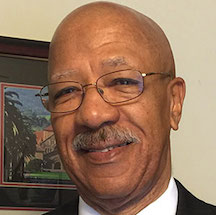 “The Police/Civilian Encounters Framework is being put forward as an aid to policing officials, criminal justice authorities, and civilian advocates,” said Professor Hyman. “It differs from current policing models because it offers a more micro-level, systematic look at how encounters between police and individual citizens unfold, thus increasing the transparency of these interactions. This will enable law enforcement officials and the general public to examine more closely how an encounter can go wrong and lead to needless injury and death.”
Dr. Hyman concludes that “civilian fatalities at the hands of police carry an emotional charge that inspires deep feelings as well as deep divisions about how and why they occur. Add to this the disproportionate numbers of African American men who die in these incidents and you have an almost immutable split in American public opinion about police and policing. This is why understanding the seven stages of a police/civilian encounter and the ramifications is so important.”
Dr. Hyman is a graduate of Gettsyburg Colege in Pennsylvania, where he majored in music education. He holds a master’s degree in educational leadership and administration, an MBA, and a Ph.D. in education from Stanford University.
The full report, Police/Civilian Encounters: Understanding How and Why They Can Turn Deadly, was published by the Samuel DeWitt Proctor Institute for Leadership, Equity, and Justice at the Graduate School of Education of Rutgers University in New Jersey. It may be downloaded here.

The only sentiments this politically correct report by James Hyman is that it’s indicative what’s inherently wrong in academia. First, how is it possible to conduct this type of research and FAIL to mention the role racism, institutional racism, and systemic racism play in the countless murder of native born Black Americans being murder by racist police. Second, it appears that James Hyman is more concerned about placating his White colleagues in academia, the PBA, along with local, state, and federal LEAs.
Yes, James Hyman may work at an HBCU but his analysis, solutions, and recommendations are centered around a Eurocentric academic lens. As such, this problem will continue because people like James will consciously and unconsciously be a defended of White Supremacy(intentional or unintentional). If one didn’t know any better, one would be so inclined to think James Hyman work at the Bradley Institute, Hoover Institute, or the Heritage Foundation.